
Q4 2025 Impact
Education as a Driver of Behaviour Change
In Q4 2025, our textile programmes demonstrated how education-led creative practice, delivered both in community and corporate settings, can meaningfully shift behaviours around wellbeing, sustainability, and work.
Across Bag Making, English Paper Piecing (EPP) delivered at Waltham Forest Adult Learning Services and a reclaimed-fabric programme delivered in collaboration with Stratford Cross, learning was intentionally designed to be practical, inclusive, and immediately applicable beyond the workshop space.
The results show that education is not just knowledge transfer — it is behaviour infrastructure.
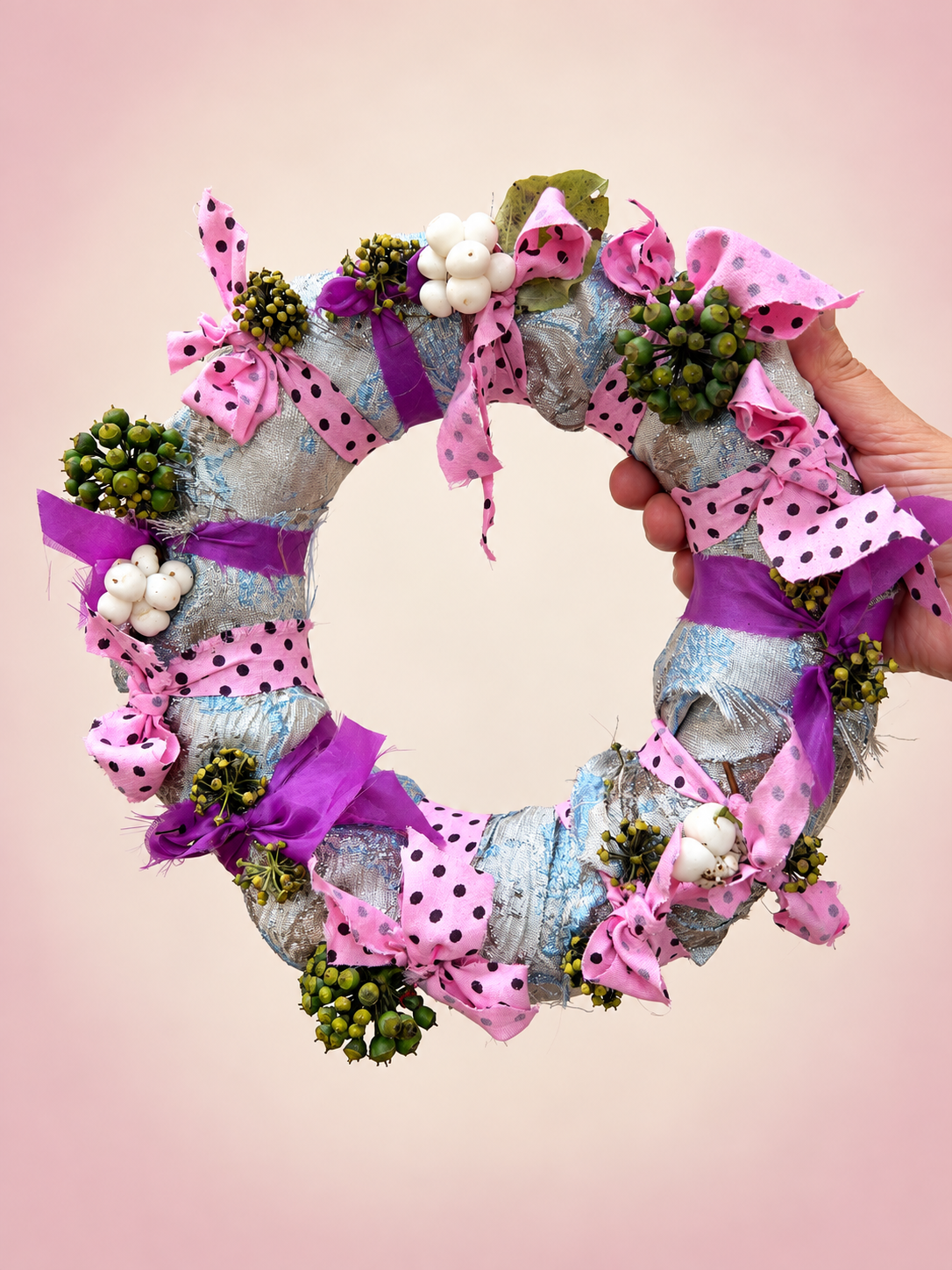
KPIs (Q4 2025)
Participation & Engagement
60+ learning hours delivered
45+ participants engaged across community and workplace settings
92% session retention rate, with learners completing multi-week programmes
High re-enrolment intent, with multiple participants progressing to intermediate levels or requesting continuation pathways
Wellbeing Outcomes
100% of participants reported improved confidence in making and decision-making
Qualitative feedback consistently referenced:
reduced stress and anxiety
improved focus and patience
increased sense of agency and self-belief
Independent practice observed outside sessions, including home completion of complex pieces
Environmental Impact
98% reclaimed or surplus textiles used in workshops
Measurable waste diversion, with materials repurposed into long-life objects rather than single-use outputs
Participants demonstrated improved material literacy, including:
fabric selection and durability awareness
repair-first thinking
reduced reliance on fast-fashion replacement
Skills & Employability
Participants acquired transferable skills applicable to creative, care, and self-employed contexts:
technical construction and sequencing
problem-solving within constraints
planning, accuracy, and time awareness
Multiple participants expressed interest in:
selling or gifting handmade items
progressing into further training
integrating textile skills into existing work or wellbeing practices
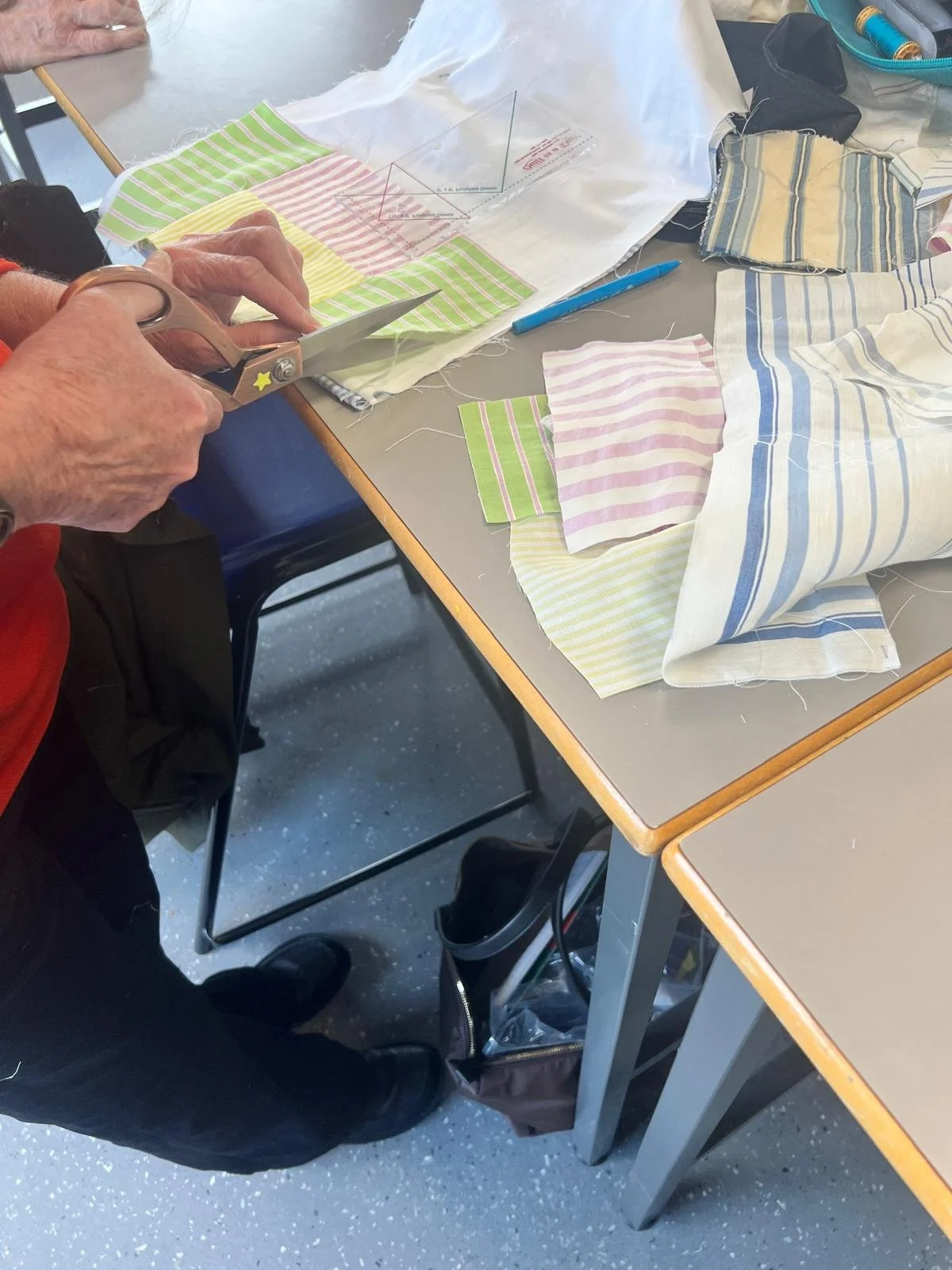
Why education works where awareness alone does not
Behaviour change does not happen through information alone.
It happens when people practice new behaviours in supported, real-world contexts.
These programmes succeeded because they combined:
Education (understanding materials, processes, and impact)
Embodied learning (hands-on making, not abstract instruction)
Time and repetition (multi-week formats rather than one-off experiences)
Participants did not just learn about sustainability or wellbeing — they experienced it through their hands.
The role of corporate settings in accelerating change
Delivering education-led workshops within corporate and mixed-use environments, plays a critical role in scaling impact.
Corporate-embedded creative programmes:
Reach audiences who may not engage with traditional community provision
Embed sustainable behaviours into daily working life rather than positioning them as “extras”
Demonstrate organisational commitment to wellbeing, ESG, and social value through action, not messaging
By situating learning within workplaces, sustainability becomes normalised, visible, and collective — increasing the likelihood of long-term behaviour change.
What Q4 2025 confirms
The evidence from Q4 shows that education-driven creative activity is a high-impact, low-waste intervention:
It improves wellbeing without clinical framing
It reduces environmental impact through skill, not restriction
It supports employability by building confidence before credentials
Most importantly, it shifts behaviour not by telling people what to do — but by enabling them to do it.
As we move into 2026, these findings are shaping longer-term programmes designed to support healthier individuals, more responsible material use, and more resilient creative pathways across both community and corporate contexts.
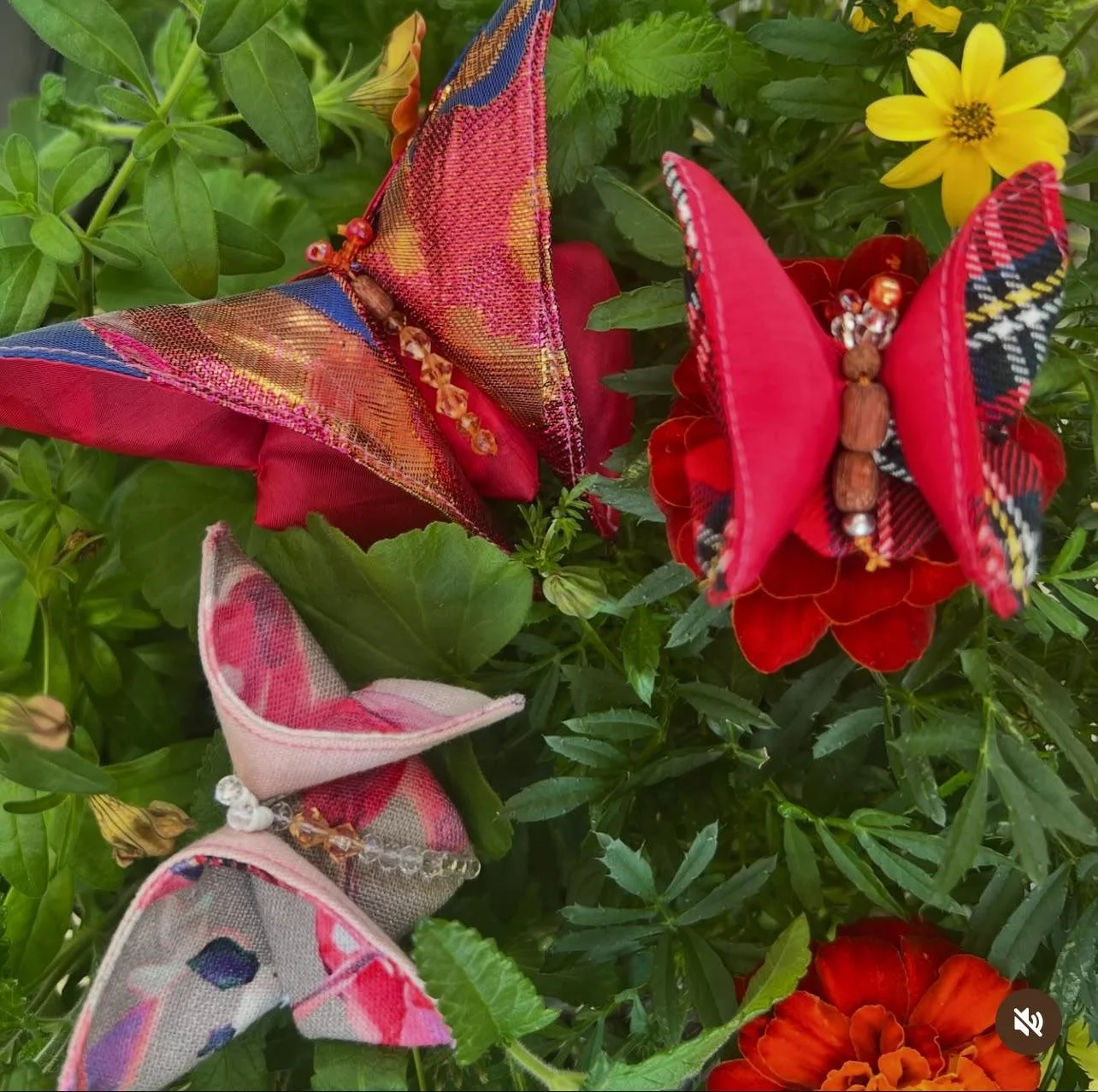
Environmental Impact (Q4 2025): Fabric Reuse, Water & CO₂ Savings
Across Q4 2025, textile reuse activities delivered through Stratford Cross, ALS, and my own making practice collectively diverted 97 kg of textile material from waste streams and avoided the environmental cost of new textile production.
Fabric Reclaimed by Programme
Programme: Stratford Cross (corporate workshops); Fabric Reclaimed: 7 kg
Programme: WF ALS (community & adult education workshops); Fabric reclaimed: 40 kg
Programme: Personal / independent projects; Fabric reclaimed: 50 kg
Total (Q4 2025) 97 kg of fabrics diverted from landfils
Estimated Environmental Savings
Textile reuse avoids the resource-intensive stages of fibre cultivation, processing, dyeing, and finishing. Based on lifecycle studies, reusing 1 kg of textile material delivers substantial environmental savings compared to producing new fabric.
Carbon (CO₂e) Savings
Average CO₂e avoided per kg of reused textiles: ~25 kg CO₂e
Total CO₂e avoided (97 kg):
≈ 2,425 kg CO₂e avoided
Equivalent impact:
This is roughly equal to the emissions produced by an average UK car driving 9,000–10,000 miles.
Water Savings
Cotton and cotton-blend textiles are among the most water-intensive materials to produce.
Average water footprint of 1 kg of cotton textile: ~10,000 litres
Reuse requires ~70x less water than producing new textiles
Applying conservative estimates:
Potential water footprint avoided (97 kg):
≈ 970,000 litres of water
That is close to one million litres of water saved by reuse-led education and making.
Why These Numbers Matter
These figures represent more than material diversion.
Education-led reuse:
Reduces future demand for high-impact textile production
Builds material literacy, enabling people to make informed, lower-impact choices
Normalises repair, reuse, and mindful consumption in both community and corporate settings
Crucially, even small quantities reclaimed in workplace-embedded programmes (such as Stratford Cross) have a multiplier effect: participants carry these behaviours into their daily lives, influencing purchasing, disposal, and sustainability norms beyond the workshop itself.
Sources:
WRAP UK – Valuing Our Clothes: The Cost of bag2UK Fashion
European Commission / EEA – Textiles and the Environment
Ellen MacArthur Foundation – A New Textiles Economy
Phys.org (2022) – Reusing 1 kg of textiles saves ~25 kg CO₂
EURIC (European Recycling Industries Confederation) – Reuse has up to 70x lower environmental impact than new textile production
Water Footprint Network – Cotton textile water footprint data
